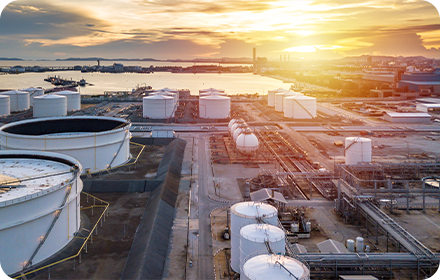


Distributed optical fiber monitoring technology
|
|
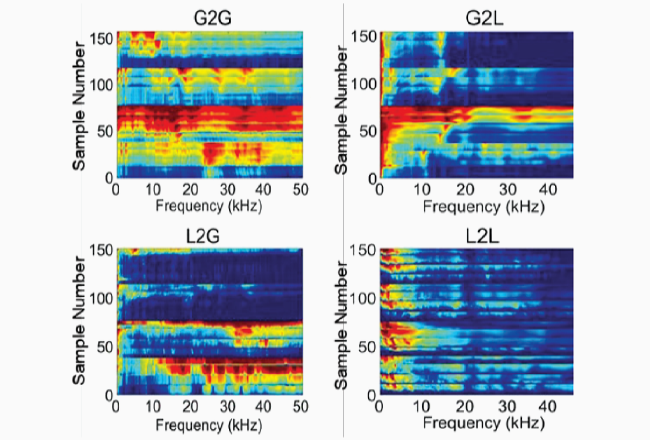
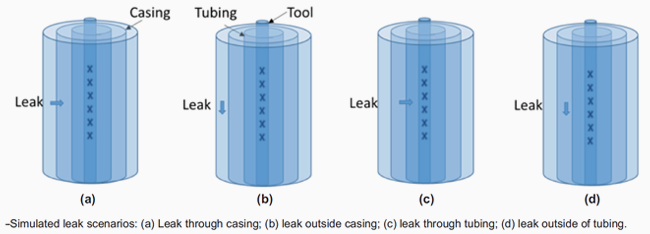
The acoustic fingerprints of four leakage modes were obtained through laboratory experiments, and the accuracy of judgment was 89.4% combined with machine learning algorithm
Oil, gas and water Pipeline Leakage Detection
(Distributed optical fiber acoustic Monitoring Technology)
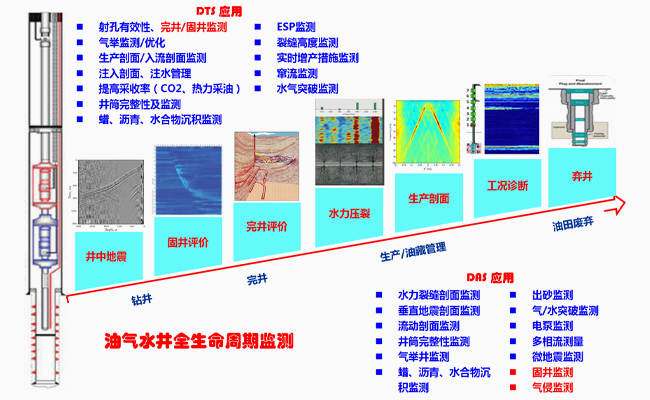
Distributed optical fiber temperature/acoustic monitoring (DTS/DAS) technology uses optical fiber itself as a sensor for signal acquisition. With the advantages of high density, whole well interval, high efficiency, low cost, high temperature and high pressure resistance, it has become an important emerging downhole monitoring technology throughout the whole life cycle of the well.
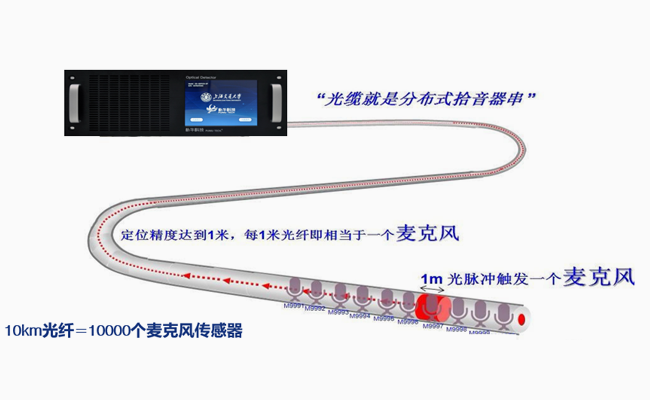
· The four indexes of spatial resolution, response bandwidth, strain density and sensing distance have been comprehensively improved
· For the first time in the field (at home and abroad), the sensor "dead zone" problem caused by the interference effect and polarization effect of light is effectively solved
· Sound restoration, high sensitivity - more than 100 times of medium-OTDR DAS. fast processing speed, 60T/S
· Geological disaster monitoring and early warning
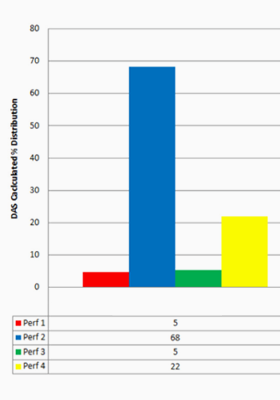
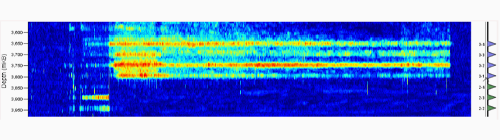
The DAS Water production forecast map accurately detects and quantifies the inflow of water from Zone 3.
The water yield forecast waterfall map (FIG. A) and average water yield map (FIG. B) reveal that formation water flows into three areas across the fault. Figure C shows the comparison between DAS predicted water cut and ground measured water cut.

(1) Use DAS&DTS for production management

(2) Hydraulic fracturing monitoring
A. Location, direction and hydraulic diffusion of hydraulic fractures
DAS monitoring acoustic energy data and DTS monitoring temperature data
for multi-stage fracturing of tight sandstone horizontal Wells
Cole et al. (2017, 2018), Molenaar and Cox (2013), Martinez et al. (2014), Ugueto et al (2016), Somanchi et al. (2016), Stokely(2016), Kavousi et al. (2017), Meek et al. (2017), Shen et al. (2017), Starr and Jacobi (2017), Zhou andWillis (2017), Byerley et al. (2018), Eaid et al. (2018), Binder et al. (2019), Binder and Chakraborty (2019),Cramer et al. (2019), Ichikawa et al. (2019), Williams et al. (2019), Zhou et al. (2019), Molenaar et al. (2011, 2012), MacPhail et al. (2012), Sookprasong et al. (2014),Wheaton et al. (2014), Boone et al. (2015), Gustavo et al. (2015), Holley and Kalia (2015), Wheaton et al.(2016), Hull et al. (2017), Ghahfarokhi et al. (2018), Carr et al. (2019), Jayaram et al. (2019)
Tubing waves to evaluate hydraulic connectivity in cracking open


The perforation produces tubing waves that are then partially attenuated in the previous stage of fracturing (hydraulic impedance of fracturing open) to evaluate fracturing effectiveness
(3) Well integrity
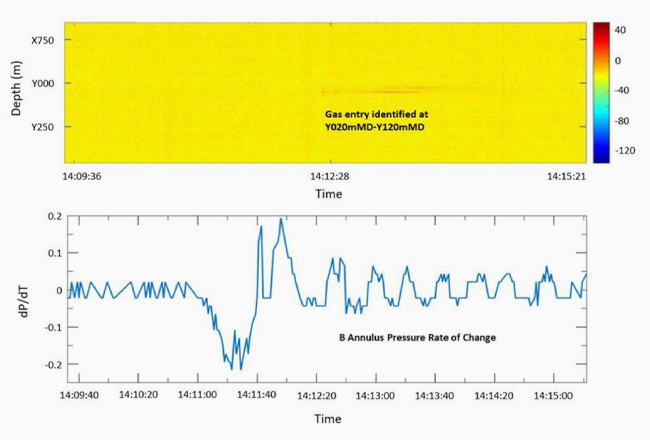
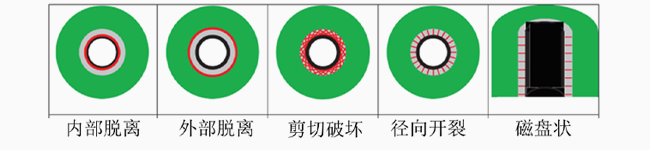
Casing - cement ring integrity monitoring
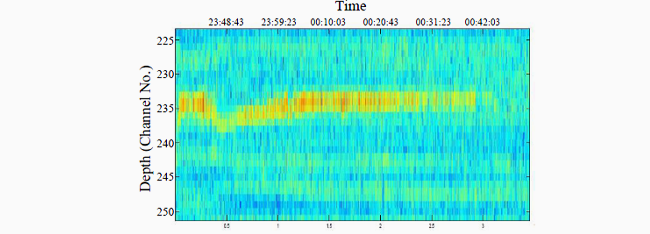
Casing leak monitoring (50-100Hz band)
(4) SAGD leading edge monitoring
The signal spectrum analysis method is often used to analyze the DAS acoustic data, judge the fluid flow pattern in the wellbore, and estimate the contribution rate of the production zone with more sound energy intensity.
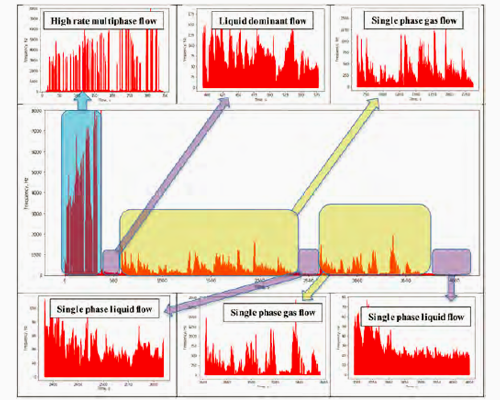
Single-phase gas frequency ~500Hz, liquid phase dominated and single-phase liquid frequency 50-100Hz, high-speed multiphase flow frequency ~5000Hz
(5) CO2 storage monitoring
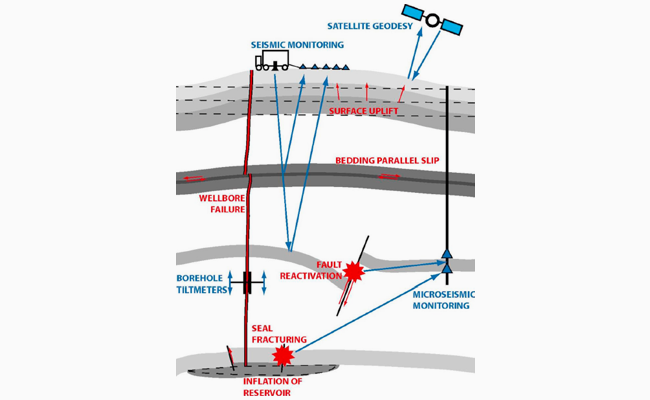
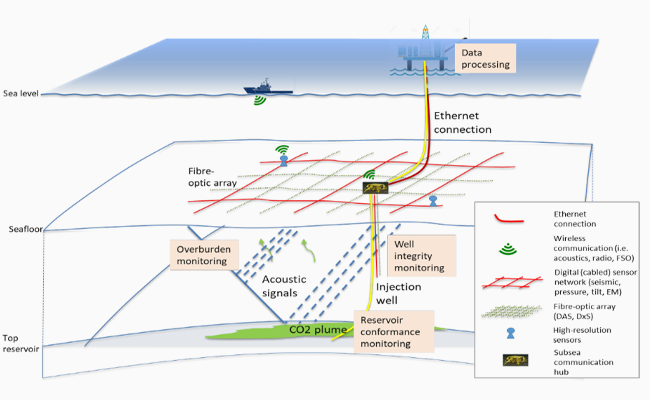
Effects of geological deformation on CO2 storage (red),
potential monitoring methods (blue)
DigiMon Project (Norway)
Potential problem
· Surface uplift
· Wellbore failure
· Fault activation
· Trap rupture
· Parallel glide of cover layer
Monitoring means
· Microearthquake
· Shaft inclinometer
· Seismic monitoring
· Satellite remote sensing
Well integrity monitoring, reservoir consistency
monitoring, cap monitoring
CO2CRC Otway CO2 Fiber Optic Monitoring Project in Australia (using Silixa's iDAS and Carina system)
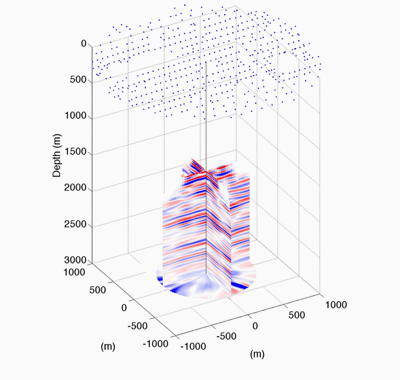
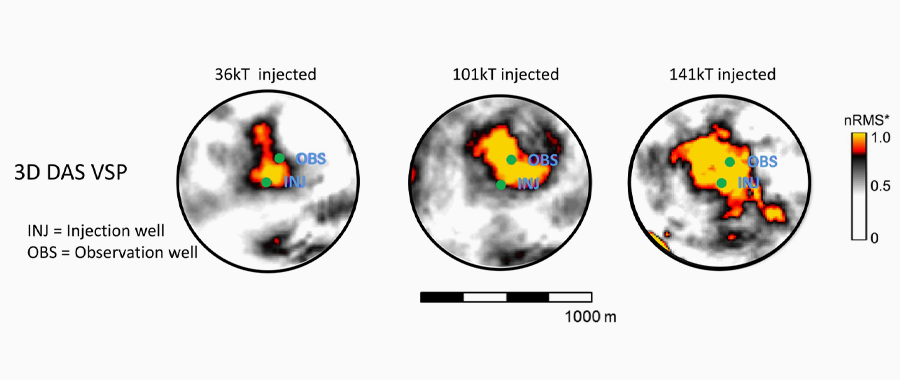
VSP (Vertical Seismic Profile)
Image the CO2 buried storage layer, track the extent of the CO2 plume,
and verify the integrity of the cap layer
· Ground Fiber Array (DAS, DxS)
· High precision sensor
· Digital sensor network (seismic, pressure, tilt, electromagnetic)

HiFi-DAS System
DAS (the same technology as HiFi-DAS) from NeuBrex in Japan has significantly better performance compared to Silixa (noise)
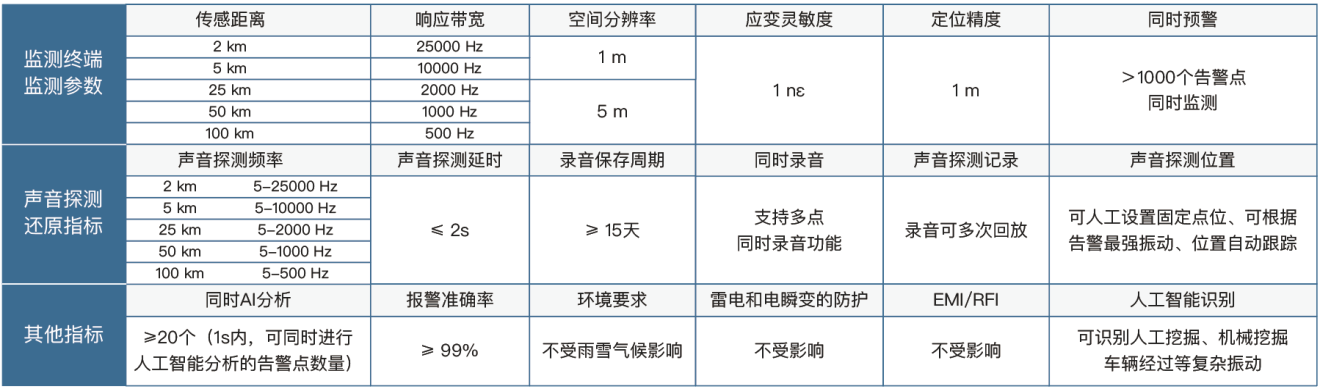

The distributed acoustic sensing (DAS) system uses optical fiber as the sensing medium, detects the phase change of Rayleigh scattered light signal on the basis of optical reflectometer technology, and obtains the amplitude and phase information of vibration waveform at any position in optical fiber.
Optical fiber acoustic wave sensing (DAS) experiment at a base in Hainan
In January 2022, I was invited to a base in Hainan to do experiments related to optical fiber acoustic wave sensing (DAS), and three DAS equipment manufacturers were also invited (including a set of iDAS equipment of British Silixa Company and University of Science and Technology of China).
The experiment is divided into two parts to test and evaluate the sensitivity of DAS system provided by each unit: (1) receive single frequency and sweep frequency signals at different distances; (2) Receiving equivalent explosive detonation signal at a distance.
The four units installed the equipment in the computer room on the coast, the submarine cable from the computer room into the sea to 35 kilometers, the submarine cable buried in the sea bed, the depth of 1 meter, the end of the submarine cable more than 50 meters from the sea level.
The test ship was located at 5km, 10km, 15km, 20km, 30km and 35km along the optical fiber. At each place, the power of the experimental ship is turned off, so that the ship is in a drifting state, and the transducer is lowered from the ship (the vibration energy of the transducer is 100 micrograms equivalent, the frequency is single frequency and sweep frequency, the frequency range is 5Hz-800Hz), and the transducer is placed 8 meters below the horizontal plane.
Results: Shanghai Kaigong was the only experimental unit that received all the single frequency and sweep frequency signals.
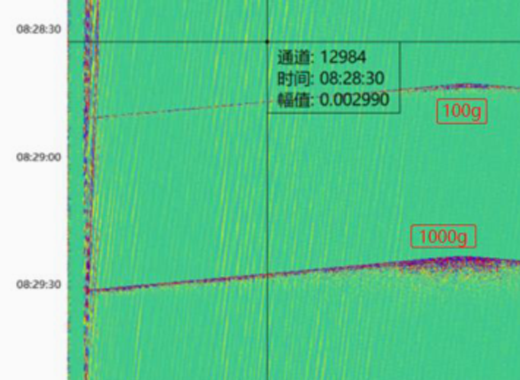
15km from the cable, the bomb yield is 100g, 1000g
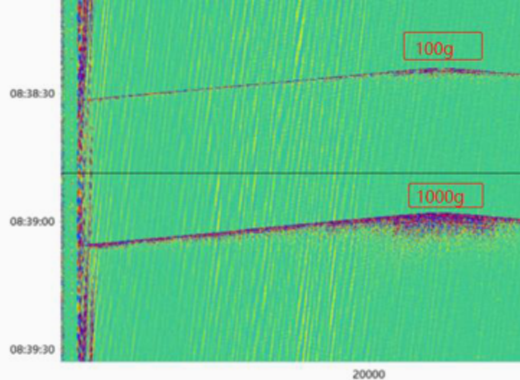
30km away from the cable, the bomb yield is 100g, 1000g
Drop separate depth bombs in the vertical direction of the fiber. Set depth 50m, 100m, 200m three depths of initiation, bomb yield 100g, 1000g two kinds. At 107km, Kaigong technology equipment can also detect the signal of the entire cable. The remaining three DAS devices are at 30km and have received less than two bomb yield signals.
Results: Shanghai Kaigong is the only one that can also receive the signal of 100g and 1000g equivalent explosives detonating at 30 kilometers, and can receive the signal of 1000g equivalent explosives detonating at 107 kilometers.
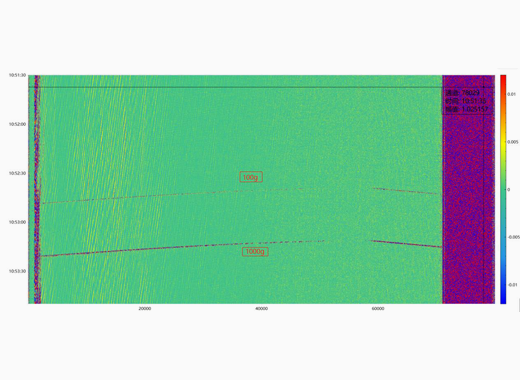
15km from the cable, the bomb yield is 100g, 1000g
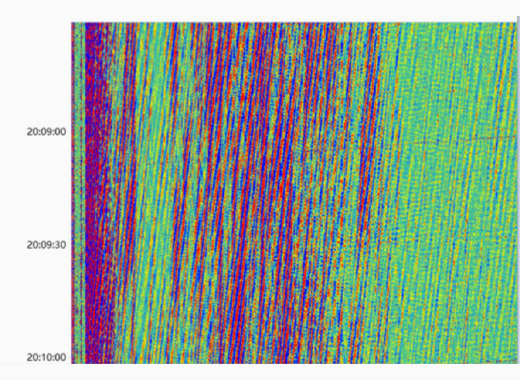
30km away from the cable, the bomb yield is 100g, 1000g

Oil and gas pipeline monitoring
Test of mixed transport pipeline in Zhuangxi Oil Production Plant of Shengli Oilfield:
Alarm position
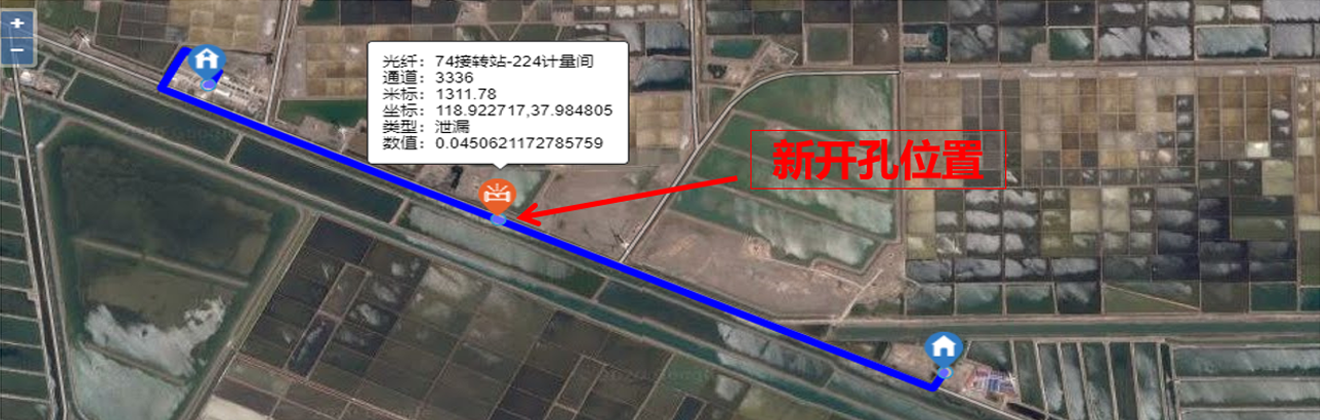
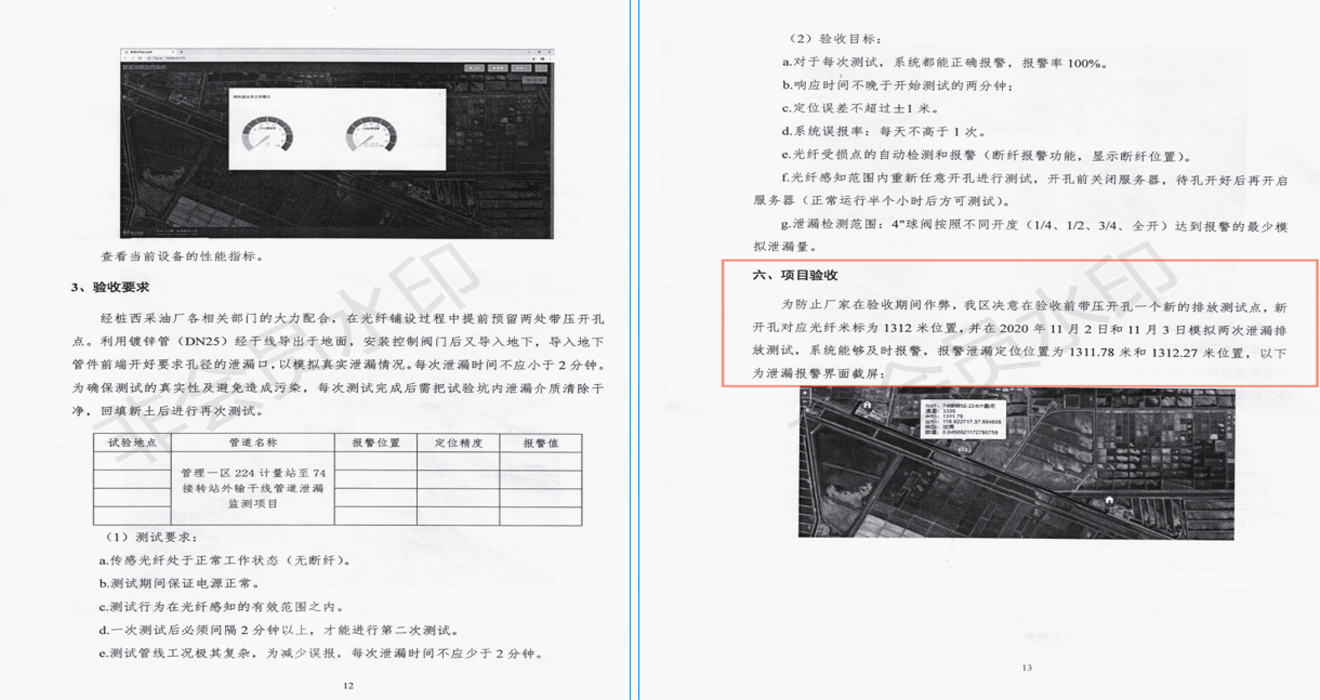
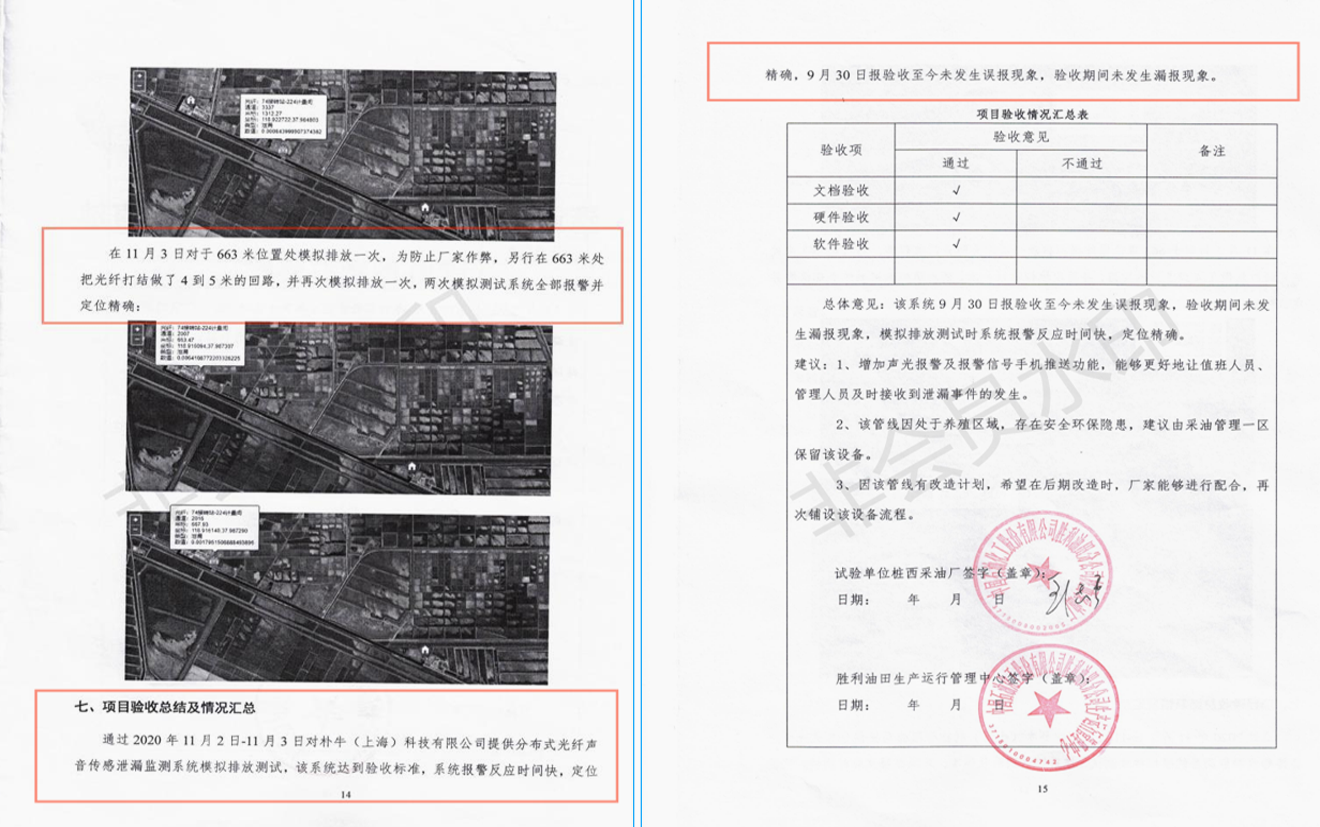
Pipeline transportation has the characteristics of stable and continuous, good safety, large transportation volume, small material loss, small footprint, low freight, and has become the first way of oil transportation. However, with the growth of service time, the pipeline gradually aging, or by the corrosion of the medium inside and outside the pipeline, pipeline construction quality defects, surrounding environmental damage, third-party damage and other factors, resulting in pipeline leakage. It poses a serious threat to the oil and gas pipelines, the surrounding personnel, facilities and the surrounding natural environment. Moreover, most of the pipelines of Zhuangxi oil production plant belong to the high consequence area and are close to the Yellow River Delta Nature Reserve in Shandong Province. At present, the leakage prediction of Zhuangxi oil production plant mainly relies on the regular inspection of personnel on duty and the pressure monitoring of entering and leaving the station. The monitoring is not comprehensive and can not quickly locate the leakage point.
Pipeline leakage monitoring and positioning technology can prevent damage caused by third-party intrusion, send an alarm and accurately locate the leak event in the first time, and then take effective pipeline protection and emergency response measures in a timely manner, which can minimize economic losses, environmental pollution and greater dangers. Improve the safety of oil and gas pipelines.

